
Gymelsdorfergasse 30 (laid 2023)
Max and Ida Zimmer
Outstanding social commitment
Max Zimmer, born on April 14, 1891, in Tzimerinitz (Ciemierzyńce), Galicia,
his wife Ida Zimmer, née Kaphun, born on December 30, 1898, in Bilka, Bohemia,
daughters Lilli (*1923), Margarete (*1924), Josefine (*1925), and Isabella (*1927), all born in Wiener Neustadt.
The parents were deported on March 5, 1941, to the Modliborzyce ghetto and most likely perished in the extermination camp at Belzec. All four daughters managed to emigrate—Lilli to Palestine, and her three younger sisters to the United States.
Max Zimmer trained as a furrier. After World War I, during which he had been taken prisoner of war in Italy, fate led him to Wiener Neustadt, where he earned his living as a cellar worker in the wine trade and met his future wife, Ida. Their marriage in 1923 apparently also marked the beginning of a new economic path, with the opening of a “gentlemen’s clothing store” on Neunkirchner Straße 34. The store not only offered various articles of clothing, but also fabrics and shoes.
After the birth of their children, Max and Ida, responding to the growing need for space and also most likely because of their thriving business, built a single-family house at Gymelsdorfer Straße 30 (today Gymelsdorfergasse), where the family moved in around 1929. Education was strongly valued within the household, whether through music lessons or even sports. Still, they carefully observed religious laws, closing the shop on Saturdays and celebrating the Jewish festival calendar. The couple earned a reputation for being very charitable, often demonstrated by taking in guests temporarily and organizing collections for the poor. Since the early 1920s, Max Zimmer was also active in the Jewish community, where he served, for example, on the committee.
During the “Anschluss” in March 1938, Ida Zimmer was summoned by the Gestapo, which sought to seize financial assets. Although the shop on Neunkirchner Straße was closed and “liquidated” by the Nazi authorities, leaving the family with little money, Max and Ida took in other Jewish people whose leases had been terminated, temporarily sheltering them in their house. Deciding to leave Wiener Neustadt eventually seemed the right course of action to the couple, so they sold their house, though they continued to live there until November 1938.
During the so-called “Kristallnacht,” all family members except for daughter Lilli (who was in Vienna at the time) were detained: Max in the municipal prison, and Ida with her daughters Margarete, Josefine, and Isabella in the prayer house at Baumkirchnerring 4. After being deported to Vienna, the family tried to get by, though all of their assets had been confiscated. While the four daughters managed to emigrate abroad—to Palestine and the United States—Max and Ida were deported, despite having had affidavits and covering the official costs. After being deregistered “to Poland” on March 5, 1941, they were transported to Modliborzyce. The couple most likely perished in the extermination camp at Belzec.
Werner Sulzgruber
Greta Zimmer became famous
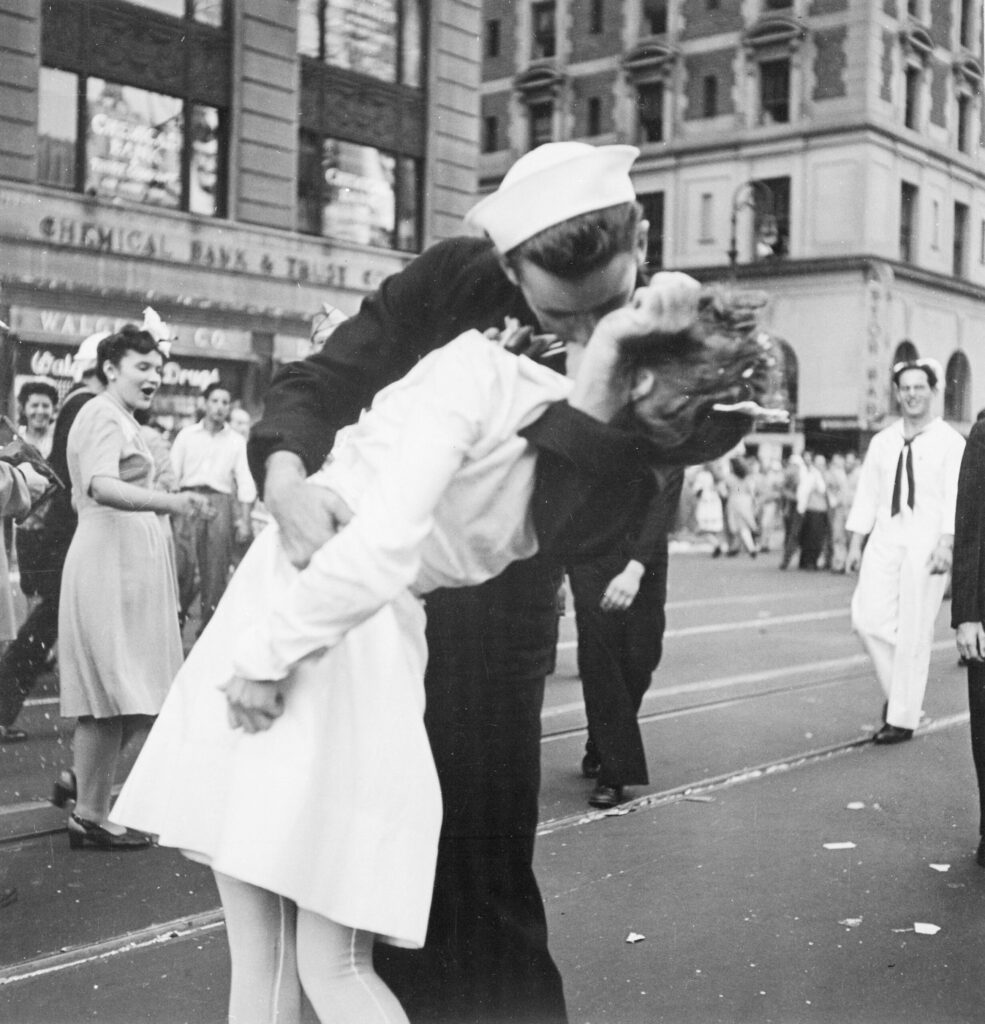
After the Japanese capitulation on August 14, 1945, spontaneous victory celebrations erupted in New York’s Times Square. Dental assistant Greta Zimmer got caught up in the festivities during her lunch break. She was grabbed and kissed by an unknown sailor. Photographer Alfred Eisenstaedt and photojournalist and war reporter Victor Jorgensen captured the kiss on camera. The picture was printed in LIFE magazine. Greta Zimmer, by then married, discovered the photo in a book about Eisenstaedt, contacted LIFE and identified herself. It is now certain that Greta Zimmer Friedman was depicted here. These images, and thus Greta Zimmer, became world-famous.
She married Mischa Elliot Friedman in 1956 and died in 2016 at the age of 92. She was buried together with her husband in Arlington National Cemetery, the United States’ cemetery of honor.
The connection between the world-famous picture and the girl who emigrated from Wiener Neustadt was only recognized here through the research of Dr. Werner Sulzgruber.
Anton Blaha
Sources: Wikipedia Greta Zimmer Friedman, www.zeitgeschichte-wn.at (contribution by Werner Sulzgruber)